
dmkrishna.com

Uncategorized

Best Digital Marketer in Malappuram Growth Expert
Uncategorized

Kunal Shah: The Entrepreneur Who Rose to Lead WhatsApp

 Success stories often begin with a bold idea, relentless determination, and the courage to take risks. Kunal Shah’s journey perfectly reflects these qualities. From building innovative startups in India to becoming the new leader of WhatsApp, his story is an inspiring example of vision, resilience, and entrepreneurship. Early Life and Education Kunal Shah was born and raised in Mumbai, India. Unlike many successful business leaders who followed traditional educational paths, Shah chose a different route. He explored various academic interests but ultimately focused on learning through real-world experiences. His curiosity about technology, consumer behavior, and business became the foundation of his entrepreneurial journey. The First Big Break: FreeCharge Kunal Shah first gained national recognition when he co-founded FreeCharge, a digital payments platform that simplified mobile recharges and online payments. At a time when digital payments were still emerging in India, FreeCharge introduced innovative reward-based systems that attracted millions of users. The platform quickly became one of India’s most successful fintech startups. Its growth eventually led to a major acquisition, establishing Shah as one of the country’s leading entrepreneurs. Building CRED: Redefining Financial Rewards After the success of FreeCharge, many expected Shah to slow down. Instead, he launched CRED in 2018, a platform designed to reward financially responsible individuals for paying their credit card bills on time. CRED stood out because it focused on trust, exclusivity, and premium user experiences. Under Shah’s leadership, the company attracted millions of users and became one of India’s most recognized fintech brands. His ability to understand consumer psychology and create unique products played a major role in the company’s success. Becoming the New Head of WhatsApp In June 2026, Meta announced Kunal Shah as the new leader of WhatsApp, succeeding Will Cathcart. The appointment marked a significant moment for both WhatsApp and the Indian startup ecosystem. Meta’s leadership highlighted Shah’s entrepreneurial mindset, global perspective, and proven ability to build large-scale technology businesses. WhatsApp serves more than three billion users worldwide, making it one of the most influential communication platforms on the planet. Leading such a platform requires innovation, strategic thinking, and a deep understanding of user needs—qualities that Shah has demonstrated throughout his career. Leadership Philosophy One of the reasons Kunal Shah stands out is his unique perspective on business and consumer behavior. He often emphasizes continuous learning, critical thinking, and understanding human psychology. Rather than focusing solely on technology, he believes successful products solve real human problems. His leadership style combines innovation with long-term thinking. This approach helped him build successful companies and earn recognition as one of India’s most influential startup founders. What This Means for WhatsApp Under Kunal Shah’s leadership, industry experts expect WhatsApp to continue expanding beyond messaging. Areas such as digital payments, business communication, AI-powered features, and commerce are likely to become increasingly important in the platform’s future growth strategy. His experience in fintech and digital ecosystems may help WhatsApp create new opportunities for businesses and users across the world. Lessons from Kunal Shah’s Journey Kunal Shah’s story offers several valuable lessons: Conclusion From launching startups in India to leading one of the world’s largest messaging platforms, Kunal Shah’s journey demonstrates the power of vision and determination. His appointment as the new head of WhatsApp is not just a personal achievement—it is a testament to the growing influence of Indian entrepreneurs on the global technology stage. As WhatsApp enters its next chapter, all eyes will be on Kunal Shah and the innovations he brings to a platform used by billions of people every day. His remarkable journey highlights the importance of innovation, adaptability, and visionary leadership in today’s digital era. If you’re interested in learning more about digital marketing, AI, and business growth, explore valuable resources and expert insights at dmkrishna.com
Best Digital Marketer in Malappuram Growth Expert 
Uncategorized

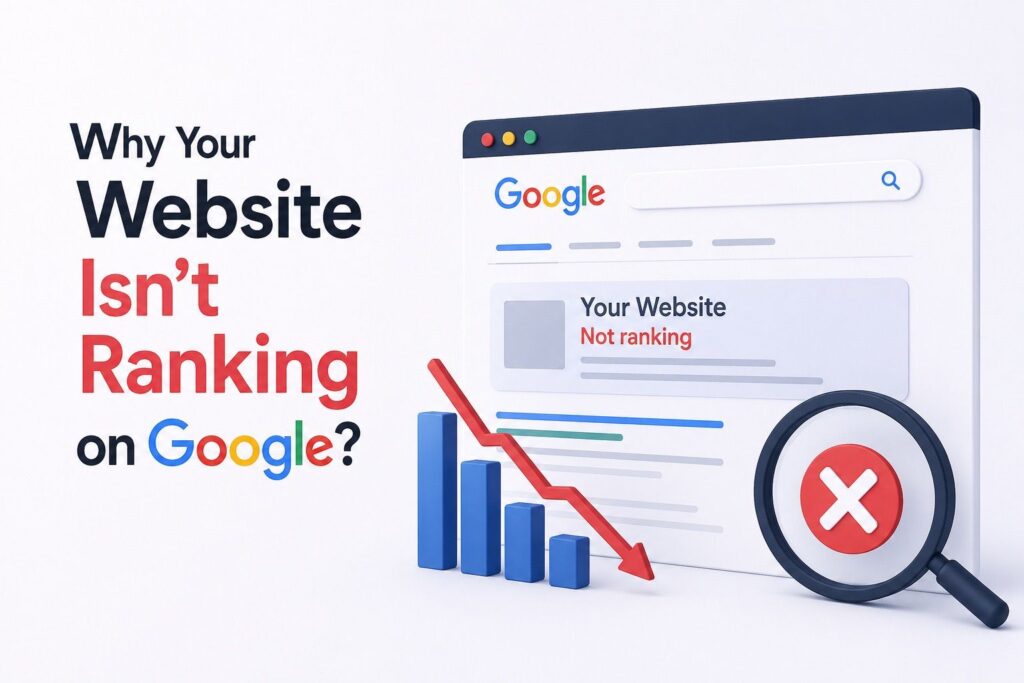
Why Your Website Isn’t Ranking on Google (And How to Fix It)

Launching a website is an exciting milestone for any business. You invest in a professional design, write content, and expect customers to start finding you on Google. But weeks—or even months—go by, and your website still isn’t appearing in search results. If this sounds familiar, you’re not alone. The truth is, simply having a website doesn’t guarantee Google will rank it. Search engines evaluate hundreds of factors before deciding which websites deserve the top positions. The good news? Most ranking problems can be identified and fixed with the right SEO strategy. If you’re looking to improve your website’s visibility, dmkrishna.com shares practical SEO and digital marketing insights to help businesses achieve long-term online growth. 1. Your Website Isn’t Properly Optimized for SEO One of the most common reasons websites fail to rank is poor Search Engine Optimization (SEO). Google needs to understand what your website is about. If your pages don’t include relevant keywords, optimized headings, meta titles, descriptions, and internal links, search engines may struggle to index and rank your content. How to Fix It A Best Digital Marketer in Malappuram | Growth Expert understands that SEO is not about stuffing keywords—it’s about creating content that genuinely answers users’ questions. 2. Your Website Loads Too Slowly Website speed is a confirmed Google ranking factor. Visitors expect pages to load within a few seconds. If your website takes too long, users leave before it even finishes loading. High bounce rates send negative signals to Google. How to Fix It A faster website improves both SEO and user experience. 3. Your Content Doesn’t Provide Value Google rewards websites that help users. If your pages contain thin, copied, or outdated content, they are unlikely to rank well. Instead of writing only about your products or services, create content that educates your audience. Examples include: Helpful content builds authority and encourages visitors to stay longer on your website. 4. You’re Targeting the Wrong Keywords Many businesses compete for extremely broad keywords that large companies already dominate. Instead, focus on long-tail keywords with clear search intent. For example, instead of targeting: Digital Marketing Try targeting: These keywords are often easier to rank for and attract more qualified visitors. 5. Your Website Isn’t Mobile-Friendly More than half of all internet searches happen on mobile devices. Google uses mobile-first indexing, meaning it primarily evaluates the mobile version of your website. If your site isn’t responsive, rankings can suffer. How to Fix It A mobile-friendly website creates a better experience for users and search engines alike. 6. You’re Not Building Quality Backlinks Backlinks are links from other websites pointing to yours. Google sees quality backlinks as votes of confidence. However, not all backlinks are equal. A few links from trusted websites are far more valuable than hundreds of low-quality links. How to Fix It Backlink building takes time, but it remains one of the strongest ranking factors. 7. Your Website Has Technical SEO Issues Sometimes your content is excellent, but technical problems prevent Google from crawling your website. Common technical SEO issues include: Regular technical audits help identify these problems before they affect rankings. 8. Your Website Is Too New Many business owners expect first-page rankings within a few weeks. Unfortunately, SEO doesn’t work that way. Google needs time to: For competitive keywords, SEO often takes several months before significant improvements appear. Patience and consistency are essential. 9. You’re Ignoring Local SEO If you serve customers in a specific city or region, local SEO is critical. Optimize your website for local searches by: Local SEO helps nearby customers discover your business when they search for services in your area. 10. You’re Not Measuring Performance You can’t improve what you don’t measure. Many businesses never analyze how visitors interact with their website. Use tools like: These tools help you identify traffic sources, keyword performance, technical issues, and opportunities for improvement. SEO Is a Long-Term Investment SEO isn’t about finding shortcuts or tricks. It’s about consistently improving your website so that it provides the best possible experience for users. When your website offers valuable content, loads quickly, works well on mobile devices, and demonstrates expertise, Google is far more likely to reward it with higher rankings. Final Thoughts If your website isn’t ranking on Google, don’t assume it’s failing. In most cases, there are specific reasons behind poor visibility—and each one can be addressed with a well-planned SEO strategy. Focus on creating valuable content, improving website performance, optimizing for search engines, and building trust over time. If you’re looking for practical SEO tips, website optimization strategies, and digital marketing insights, visit dmkrishna.com. As a Best Digital Marketer in Malappuram | Growth Expert, I share proven strategies that help businesses increase their online visibility, attract the right audience, and achieve sustainable growth through ethical digital marketing.

Best Digital Marketer in Malappuram | Growth Expert
Uncategorized

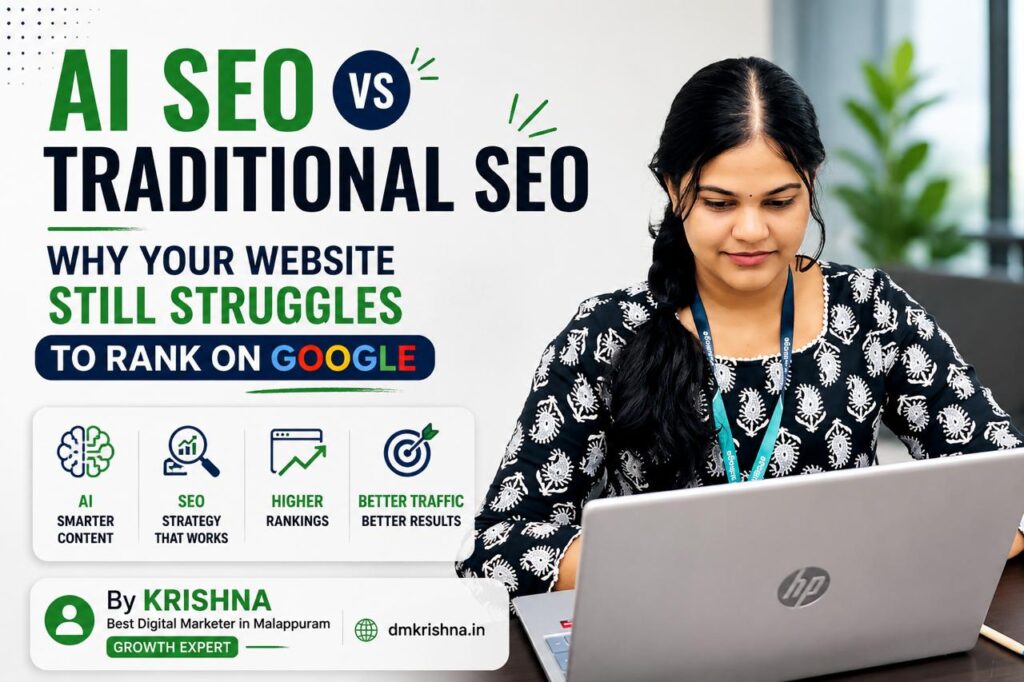
AI SEO vs Traditional SEO: Why Your Website Still Struggles to Rank on Google in 2026

By Krishna | Best Digital Marketer in Malappuram | Growth Expert IntroductionMany business owners invest time and money into their websites expecting quick results from Google. They publish content regularly, use SEO plugins, and even leverage AI tools to create articles faster. Yet months later, their website remains invisible in search results. If this sounds familiar, you’re not alone. The truth is that ranking on Google in 2026 is no longer about choosing between AI SEO and Traditional SEO. The real challenge is creating content that genuinely solves users’ problems while meeting modern search engine requirements. Let’s explore why websites fail to rank and discover a smarter approach that combines the strengths of both AI and traditional SEO. Why Many AI-Generated Articles Fail ?Artificial Intelligence has transformed content creation. A complete blog post can now be generated within minutes. However, speed doesn’t always equal quality. Common issues with AI-generated content include: – Generic information available on hundreds of other websites– Lack of real-world experience and expertise– Limited understanding of audience pain points– Weak emotional connection with readers– Little originality or unique insights Search engines are becoming better at identifying content that simply repeats existing information. Users don’t want another article that tells them what SEO is. They want solutions to their specific problems. Why Traditional SEO Alone Isn’t Enough Traditional SEO remains an essential part of digital marketing.It includes: – Keyword research– Technical SEO– Meta optimization– Internal linking– Backlink building– Website performance improvements These factors help search engines understand your website. But there’s one major problem. Many websites become so focused on pleasing search engines that they forget about the actual people reading their content. A perfectly optimized article won’t perform well if visitors leave without finding the answers they need. Today’s SEO success depends on balancing technical optimization with genuine value. The Real Solution: AI + Human Expertise Instead of viewing AI and traditional SEO as competitors, successful marketers combine both. How AI Can Help AI can be used for: – Content research– Topic discovery– Keyword suggestions– Article structure creation– Content enhancement Where Human Expertise Matters Human input adds:– Real experiences– Industry knowledge– Unique perspectives– Trust and credibility– Practical solutions The most successful content in 2026 will be created by people who use AI as a tool—not as a replacement for expertise.The Biggest Mistake Website Owners Make Most websites create content around broad topics such as: – What is SEO?– Benefits of Digital Marketing– Why Businesses Need a Website While these topics are informative, they often fail to address specific user problems. Instead, focus on questions people are actively searching for: – Why isn’t my website ranking?– Why am I getting traffic but no leads?– Why did my Google rankings suddenly drop?– How can I improve local visibility? Problem-focused content naturally attracts more engagement and trust. A Practical Framework for Better Rankings Before publishing any article, ask yourself: What problem am I helping my audience solve? Then follow this structure: Step 1: Identify the ProblemClearly explain the issue your audience is facing.Step 2: Explain the CauseHelp readers understand why the problem exists. Step 3: Provide Practical SolutionsOffer actionable steps readers can implement immediately. Step 4: Share Real ExamplesUse case studies, experiences, or industry examples. Step 5: Guide the Next ActionTell readers exactly what to do after reading your content. This framework improves user experience, engagement, and SEO performance. Final Thoughts: The future of SEO isn’t about AI versus Traditional SEO. It’s about creating content that solves problems better than anyone else. AI can help you work faster. Traditional SEO helps search engines discover your content. But genuine expertise and value are what ultimately earn rankings, traffic, and trust. Businesses that focus on helping users rather than simply targeting keywords will continue to win in search results. If your content answers real questions and solves real problems, Google has every reason to reward it. About the Author Krishna is a Best Digital Marketer in Malappuram | Growth Expert specializing in SEO, content marketing, social media marketing, and digital growth strategies. Through dmkrishna.in, he helps businesses improve their online visibility, generate qualified leads, and achieve sustainable growth through effective digital marketing.

Best Digital Marketer in Malappuram | Growth Expert
Uncategorized

Top Digital Marketing Strategies for 2026

IntroductionDigital marketing is constantly evolving. What worked yesterday may not work today. To stay ahead, businesses must adapt to new trends and strategies that shape the future. As a Best Digital Marketer in Malappuram | Growth Expert, I have seen how businesses that embrace modern digital marketing strategies achieve better visibility, engagement, and growth.

Best Digital Marketer in Malappuram | Growth Expert
Uncategorized

A Beginner’s Journey into Digital Marketing: Lessons, Challenges, and Growth in 2026

By Krishna | Best Digital Marketer in Malappuram | Growth ExpertWebsite: dmkrishna.in Introduction Every career starts with a single step. For me, that step was entering the world of digital marketing. At first, I knew very little about SEO, content creation, social media management, or website optimization. Like many beginners, I was curious but unsure where to start. As I explored different areas of digital marketing, I realized that success online is not just about promoting products or gaining followers. It is about understanding people, solving their problems, and creating meaningful experiences. This realization changed how I viewed marketing and motivated me to learn more every day. Discovering the Digital World My interest in digital marketing grew when I noticed how businesses were attracting customers through websites, search engines, and social media platforms. I wanted to understand how these strategies worked and how they helped brands grow online. The more I learned, the more I realized that digital marketing combines creativity and strategy. A successful marketer must think like a creator, analyst, and problem-solver at the same time. Challenges Along the Way Learning digital marketing was not always easy. New concepts, changing algorithms, and unfamiliar tools often felt overwhelming. There were moments when understanding SEO reports or website analytics seemed difficult. One of the biggest lessons I learned was that mistakes are part of the learning process. Every failed attempt provided valuable experience and helped me improve my skills. Instead of giving up, I focused on learning from each challenge and moving forward. Skills That Changed My Perspective My journey helped me develop several important skills: Creative Thinking Creating content requires fresh ideas and the ability to communicate messages effectively. Analytical Skills Understanding data and measuring results became essential for making better decisions. Communication Explaining ideas clearly and connecting with audiences improved my confidence. Problem Solving Every marketing challenge encouraged me to think critically and find practical solutions. Continuous Learning The digital world evolves rapidly, making learning a lifelong process. Why Digital Marketing Matters Today In today’s connected world, businesses rely on digital platforms to reach customers. A strong online presence can help brands build trust, generate leads, and increase sales. Digital marketing provides opportunities for businesses of all sizes to compete and grow. Whether through SEO, social media, content marketing, or paid advertising, the goal remains the same: delivering value to the right audience. Like any field, digital marketing comes with its own challenges. Keeping up with trends, understanding algorithms, and creating engaging content can be difficult at first. However, these challenges help build strong skills over time.Skills DevelopedCreativityAnalytical thinkingCommunicationProblem-solvingThese skills not only help in digital marketing but also in personal growth. My Future Goals As a digital marketer in malappuram I continue my learning journey, my goal is to become a trusted digital marketing professional who helps businesses achieve sustainable growth online. I believe effective marketing is not about chasing trends. It is about understanding audience needs, providing valuable solutions, and building long-term relationships through authentic communication. Each project, campaign, and learning experience brings me one step closer to that goal. Conclusion Looking back, starting my digital marketing journey was one of the best decisions I have made. The field has challenged me, taught me valuable skills, and opened new opportunities for personal and professional growth. For anyone considering a career in digital marketing, my advice is simple: start today. You do not need to know everything from the beginning. Stay curious, keep learning, and be willing to adapt. Success in digital marketing is built through consistent effort, practical experience, and a commitment to continuous improvement.

Best Digital Marketer in Malappuram | Growth Expert
Uncategorized

Easy Way to Create a Good Website – A Practical Guide for Everyone

You know, creating a website used to feel like rocket science for most people. I remember talking to a shop owner in Malappuram a few years back who wanted an online presence but thought he needed a computer science degree just to start. Fast forward to today, and the reality is completely different. Building a decent website is something anyone can do if they follow the right steps and keep things simple. Let me share what I’ve learned working with businesses around Wayanad and Malappuram over the years. Whether you’re a digital marketer in Wayanad or someone just trying to get your business online, the principles are basically the same. Stop Overthinking, Start Planning Before you touch any website builder, sit down with a cup of chai and think about what you actually want. What’s the main purpose of your site? Are you trying to sell products? Share your services? Build a portfolio? Let people know about your shop? This matters because it shapes every decision you make later. I’ve seen people jump straight into building without knowing what they want to show. Then six months in, they’re rebuilding everything because they didn’t plan properly. It’s like building a house without deciding how many rooms you need first. Write down three to five things your website must do. That’s it. Not ten things, not twenty. Keep it focused. When you’re starting out, less is always more. Choose the Right Platform Without Getting Confused Here’s the good news – you don’t need to code. Seriously. There are platforms built exactly for this situation. Let me break down what works: WordPress is like the Swiss army knife of websites. It’s flexible, powerful, and there are thousands of tutorials available. But it needs a bit of technical understanding, so it’s not for complete beginners. Wix and Squarespace are drag-and-drop platforms. You just click, drag things around, add your content, and boom – you have a website. They’re more expensive than WordPress in the long run, but they’re easier to manage. Shopify is specifically for selling things online. If you’re running an ecommerce business, this is your best bet. Blogger is free and simple. Good if you just want to publish articles without worrying about the technical stuff. My honest take? If you’re just starting, go with Wix or Squarespace. You’ll spend a bit more money, but you’ll save yourself headaches and weeks of struggling. Once you get comfortable, you can always switch to something more complex later. Get a Domain Name That Makes Sense Your domain name is like your shop’s sign board. People need to remember it. You don’t need anything fancy – just something clean, short, and easy to spell. If your business is already known by a name, use that. If you’re a digital marketer in Wayanad trying to build your brand, something like yourname-digitalmarketing.com works perfectly fine. Avoid too many hyphens or numbers. Keep it professional sounding. Domain names cost between 100 to 500 rupees per year for most standard options. Don’t go crazy spending money on fancy domains when you’re starting. Pick something decent and move forward. Keep Your Design Simple and Clean This is where people often go wrong. They see beautiful websites and try to copy everything. Then their site becomes confusing and slow. Here’s what actually works: Your website should load in under three seconds. If visitors have to wait around, they leave. It’s that simple. Use colors that match your business but don’t go wild. Stick with two main colors and maybe one accent color. Too many colors make your site look unprofessional. Make sure everything is easy to read. Don’t use fancy fonts that look pretty but are hard to read. Stick with common fonts. Make text big enough that people don’t strain their eyes. Most importantly, put the important stuff above the fold. That’s the part people see without scrolling. Your logo, your main message, and a call-to-action button should be there. Write Content That People Actually Want to Read Your website is useless if nobody understands what you do or why they should care. Write like you’re talking to a friend, not like you’re writing a textbook. Tell people what your business is about in the first sentence. Don’t make them hunt for information. If you’re offering digital marketing services in Wayanad, say it clearly. Write why you’re different from others. What do you do that others don’t? Share real stories. Talk about actual clients you’ve helped. People connect with stories more than with fancy sentences about your company. Keep paragraphs short. Long paragraphs look intimidating on screens. Break things up. Use headings. Use bullet points. Make it easy for people to scan your page. Add Photos That Relate to Your Business Pictures speak louder than words. A good photo can explain your business better than paragraphs of text. Use clear, real photos. Not those generic stock photos that every website uses. If you’re a shop owner, take photos of your actual shop. If you’re a digital marketer in Wayanad, maybe include a photo of yourself or your workspace. Compress your photos before uploading. Huge image files slow down your website. Use a free tool like TinyPNG to make files smaller without losing quality. Make Navigation Easy People should be able to find what they’re looking for within three clicks. No exceptions. Keep your menu simple. Home, About, Services, Contact, Blog maybe – that’s enough for most websites. Don’t create fifty different pages. Make sure your contact information is easy to find. Put it in the footer and on a dedicated contact page. Include phone number, email, and maybe your location if it’s important. Set Up Contact Forms That Actually Work You want people to reach you, right? Make it easy for them. A contact form shouldn’t ask for more than necessary. Name, email, and message. That’s it. Some people add phone number if they want to call customers back. But don’t ask for their life story. Test your forms

Scroll to Top